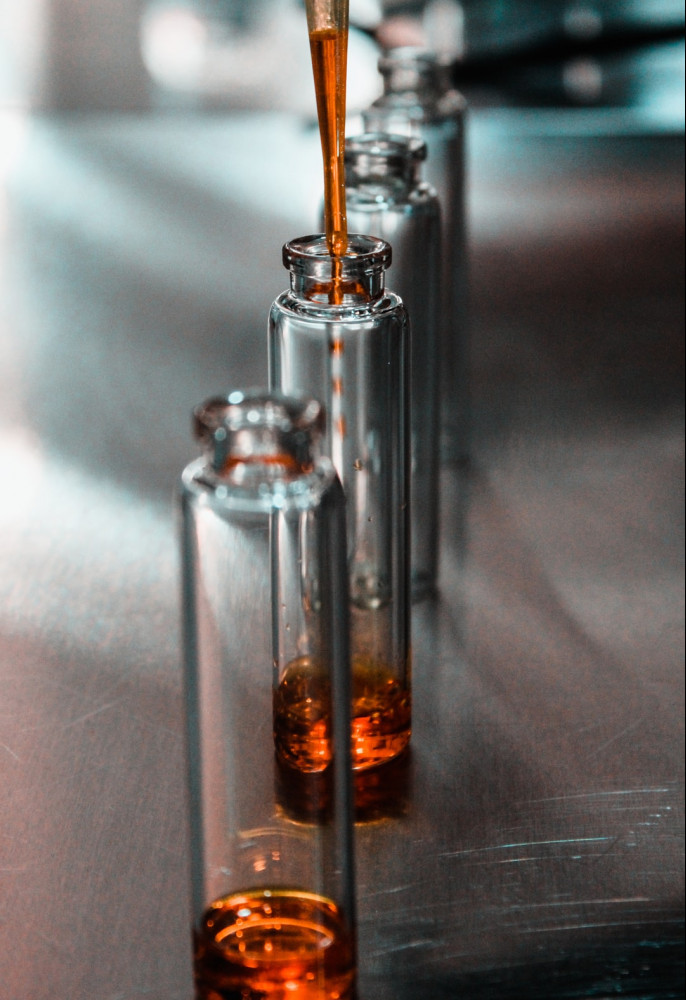
How to Make a Perfume with Essential Oils — *Intuitive Method*
I’ve been a natural perfumer for almost 4 years now and my favorite way to create a new perfume is through the intuitive method. This is a more advanced method since you need to have…
I’ve been a natural perfumer for almost 4 years now and my favorite way to create a new perfume is through the intuitive method. This is a more advanced method since you need to have…
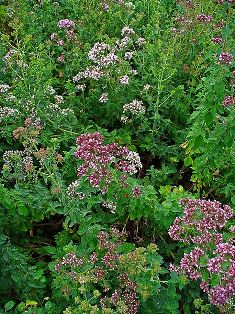 Both oregano essential oil and the herb can be used for many infectious, fungal and antiseptic purposes.
The oil is stronger and therefore can act more quickly and surely than using the whole herb; however, the herb is useful for milder conditions and general cleansing and toning uses.
Below are the skin care uses for both whole herb and the essential oil.
Habitat: Native to the Mediterranean, oregano likes a hot, sunny and dry location. It grows as a perennial and makes a fine groundcover here in Pennsylvania. Being useful also as an insectary plant, it is a star in permaculture.
Parts used: leaves and flowers
Pertinent Information About Oregano for Skin Care
Oregano is a well-known culinary herb and has an ever-growing popularity for its medicinal and cosmetic uses. It is an antiseptic, antibacterial, antifungal both in the herb form and the essential oil. Oregano oil was found to have the highest and broadest antibacterial, antifungal activity out of 5 tested essential oils. It is also a very strong antioxidant and was found to have the highest antioxidant activity among the same selection of herbs.
The oil being extremely concentrated makes it potentially more potent and to be used with greater caution. Oregano essential oil is to be used diluted only. The dilution rate should never be higher than 3%. Being that the oil is high in phenols, it can burn the skin and mucous membranes, as well as act as a liver toxin. If using the essential oil treat it like an antibiotic and use the preparations for 12 days maximum to kill the cause of the condition.
The following applies to both the whole herb and oregano essential oil, with the oil being a more potent source of the following properties.
For skin care uses, oregano can be prepared in many ways, including as an infused oil, a tincture, a vinegar and a tea. The dried herb can be added to a cleansing grains mix for skin conditions like acne or over oil production. Alternatively, oregano essential oil can be added to other preparations for its extremely powerful properties. It is like oregano to the 10th power so is used in small amounts.
The highest quality organic oregano essential oil can be purchased here.
Ingredients:
Aloe vera gel 1 ounce
Oregano essential oil 4 drops
Tea tree oil 4 drops
Lavender essential oil 3 drops
Directions:
Simply pour aloe into bottle and add the essential oils. Shake well and apply with cotton or clean fingers twice daily.
Sore nipples often occur when breastfeeding begins. Particularly when baby has trouble latching on properly, the delicate nipple and areola tissue can get irritated, inflamed and if left untreated, it can crack, leading to bleeding and potentially infection.
Fortunately, you don’t have to let it get that far as there are many herbs and natural remedies that are easily available and effective.
When I began breastfeeding my son, I experienced pain in the first few weeks. It was particularly painful when he latched on to the nipple only (as opposed to the areola). So, while trying out some natural remedies, also work towards a proper latch.
There are topical remedies that can ease the pain of sore nipples and help them to heal. The nipples will eventually “toughen up”. Any tissue that is getting constant pressure and friction will be sore and develop a wound at first, then it rebuilds with skin cells that are able to withstand the sensation. Coupled with baby’s growing experience with a proper latch, the sore nipples will stop being sore.
Both peppermint water and peppermint gel are effective for greatly preventing nipple and areola damage and pain. I’ve used my homemade peppermint gel (recipe above) and can tell you, it is quite numbing! The wonderful thing is that the numbing effects last about 2-3 hours, the typical time between nursing sessions in the beginning (though my son was more frequent than that :). Just be sure to rinse the gel off with plain water before the next nursing session as this is not meant to go into baby’s mouth.
Peppermint water was found to be more effective than expressed breast milk in one study and peppermint gel more effective than lanolin in another study. Using peppermint water (Mentha x piperita) to prevent and treat sore nipples is a folk medicine remedy of Azarbayejan in the North West of Iran.
Peppermint essential oil is strong, so please be very cautious in its use. It must be properly diluted or it can cause irritation and damage the skin.
Benefits of Using Peppermint to Treat Sore Nipples:
1. Greatly decreases the likelihood of nipple and areola cracks, with more effectiveness than expressed breast milk or lanolin.
2. Reduces chances of having a cracked nipple at all, meaning that using peppermint will help to make breastfeeding a smooth, painless process.
3. Decreases the pain that can happen with breastfeeding, and less pain increases the chances that you will choose to continue to nurse! I remember a few days in the beginning of nursing where I was literally tearing up during a session. It stopped hurting abruptly, thankfully I was treating my nipples with balms and what not, so they healed up quickly. Peppermint actually acts as a pain-reliever.
-Numbing effects
-Ability to increase tissue flexibility, making it resistant to cracks
-Calming and anti-inflammatory properties
-Has antibacterial activity
Peppermint has been used externally as a skin anesthetic, for healing burns and wounds, and for soothing itching and inflammation.
Ingredients:
Distilled water 1 ounce
Peppermint essential oil 8 drops
Directions:
This recipe can be increased, just be sure to keep the proportion between water and peppermint oil. Store the peppermint water in the refrigerator.
Soak a cloth in the peppermint water and apply to the nipple and areola. Apply after a nursing session only and rinse off with plain water before the next nursing session. Continue for the first month of breastfeeding or until nipples are no longer sore.
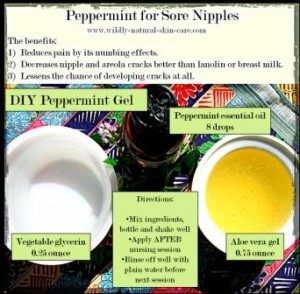
Ingredients:
Vegetable glycerin 1/4 ounce
Aloe vera gel 3/4 ounce
Peppermint essential oil 8 drops
Directions:
Mix the glycerin and aloe together, then add the peppermint essential oil. Cap and shake.
Apply after a nursing session only and rinse off with plain water before the next nursing session. Continue for the first month of breastfeeding or until nipples are no longer sore. All of the ingredients for the peppermint gel for sore nipples can be found at Mountain Rose Herbs.
Click Here to Read Part 2 about more remedies for sore nipples.
References:
Effect of peppermint water on prevention of nipple cracks in lactating primiparous women: a randomized controlled trial. Melli, Rashidi, Delazar, et al. International Breastfeeding Journal 2007, 2:7.
A randomized trial of peppermint gel, lanolin ointment, and placebo gel to prevent nipple crack in primiparous breastfeeding women. Melli, Rashidi, Nokhoodchi, et al. Med Sci Monit, 2007; 13 (9).
Photo Credit:
Peppermint (bottom) by Sten Porse (Self-published work by Sten Porse), via Wikimedia Commons
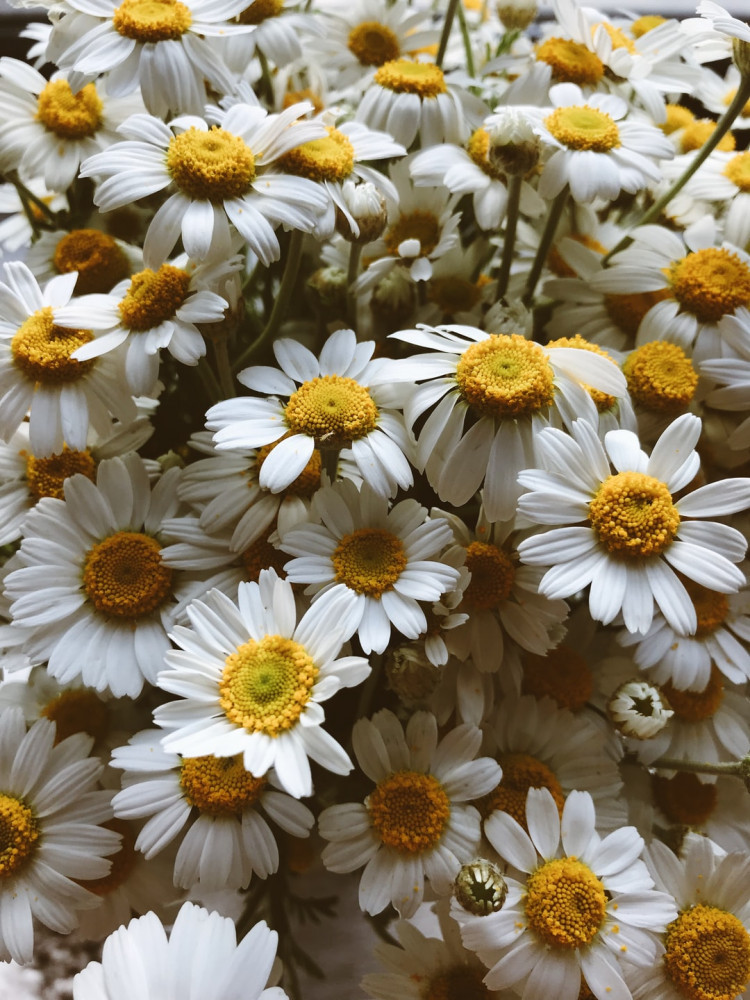 Chamomile essential oil and the whole herb are both very useful for skin conditions. Being a gentle herb with a long track record, chamomile is a go-to when dealing with sensitive skin, babies and kids.
Go here for the highest quality chamomile flowers.
Matricaria recutita
Habitat: Native to open meadows of Europe and west Asia. Prefers full sun; dry, light, sandy, and well-drained soils. Annual.
Parts used: Primarily flowers, but leaves can be used also. Essential oil.
The fresh herb is best to use for skin conditions because it holds the volatile oils of the plant. This is why chamomile essential oil is so effective too. The essential oil has similar uses as the herb and more!
Chamomile e.o. can be added to oils, balms, aloe gel and ointments. It can be used at a dilution rate of between 1 to 10 drops per ounce. Use it as an anti-inflammatory for acne, eczema and rashes. The presence of the plant chemical azulene gives the essential oil a blue color and also its nickname “blue chamomile”. It has calming effects and so is additionally useful for remedies for babies and stressed-out individuals or in moments of hysteria (hey, who likes open wounds??)!
The essential oil is specific for calming allergic responses, and hypersensitive skin flair-ups.
A chamomile bath is made by filling a small cloth bag with chamomile flowers and running the warm water over it and then allowing the bag to float around. It makes a soothing wash with a lovely distinctive apple-flower scent. The color is tan with yellow and orange hues. Chamomile is subtle and not too extreme and makes a nice bath for babies. This shop carries high quality chamomile flowers.
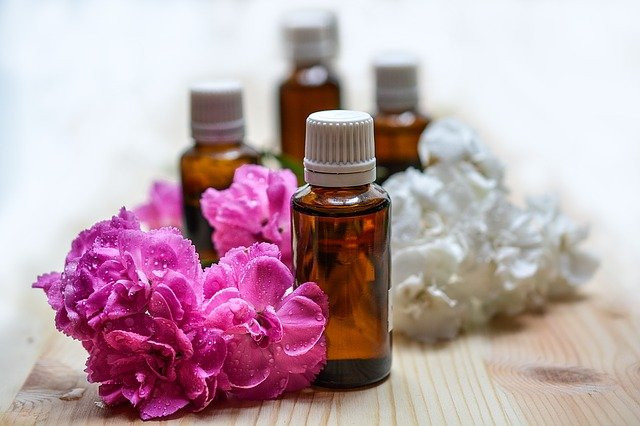 There are many differences between essential oils and herbal oils. Matter of fact, the only real similarity is the plant from which they come… oftentimes, I see the two totally different products being confounded into one.
It is important to distinguish between the two. Many times I encounter people saying that they tried to make an herbal oil and it didn’t turn out how they expected. I suspect this is because they are imagining an essential oil as the final product. The two are completely different products; the most common part being the word ‘oil’.
While both are used frequently in natural skin care, they are as different as salt and clay.
What do you think the biggest difference between the two is?
Essential and herbal oils are produced through totally different methods. While essential oils are made through a complex and sophisticated distillation process, herbal oils are made in many low tech ways and are quite fun to make at home.
Each of these products has a totally different use, though both are used in natural skin care. E.O.’s are used in small amounts and herbal oils quite liberally! Herbal oils are the basis for the practice of abyangha, which tends the skin but also is very beneficial for the nerves, digestion and blood.
This is a biggie. Essential and herbal oils are very different in terms of scent and you’ll want to learn which is which. E.O.’s are used in aromatherapy for their scent and natural chemicals that produce therapeutic effects. Herbal oils are often very mild smelling or totally take on the smell of the carrier oil.
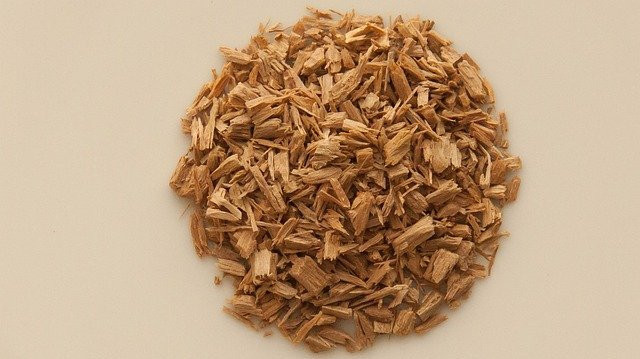 Sandalwood essential oil is a rare and precious oil with many applications. Its aroma is deep, woody, spicy and earthy with a touch of sweet. It is used as a base note in perfumery. I like to blend sandalwood with floral notes, like lavender, rose and ylang-ylang, in natural perfumes.
Click here to purchase the best sandalwood oils.
Ingredients:
Sandalwood essential oil 35 drops
Rose essential oil 21 drops
Vanilla tincture ½ oz
Castor oil 1/3 oz
Directions:
Mix the castor oil and vanilla tincture and pour into a suitable, 1 ounce bottle. Then add the essential oils, cap and give it a good shake. You will notice that the fragrance settles and really forms its true beauty when it has had a chance to set overnight.
To use, shake well before applying. Dab on all the chakra points, wrists and neck. It is light, sweet and grounding.
Traditional sandalwood essential oil is from India and comes from an every-blooming evergreen tree, Santalum album. The essential oil is extracted from steam distillation of the crushed wood. However, S. album is at risk for extinction and so I always use the essential oil from the species S. austrocaledonicum, which is being sustainably managed in Australia. It is also known as Vanuata, as this is the Australian island of which the sandalwood species is native.
Yogis attribute sandalwood oil as the fragrance of the subtle body, the energetic aura. It is used as an aid to awaken the kundalini and connected with both the root and crown chakras. Some can be dabbed on the chakra points before meditation to aid in slowing the ego mind and relaxing into spirit.
-Antiseptic and antifungal, making it useful for acne, inflamed and itchy skin, as well as skin fungus- calming, slowing, harmonizing and so useful for excess nervous energy, irritability and aggression
-Used for infections, including staph and strep
-A tonic for dry and dehydrated skin
-Used with lavender and helichrysum for burns
-As a base for “attars”, traditional Indian perfumes and as a fixative in natural perfumery
The vast majority of sandalwood e.o. on the market is either adulterated or harvested in an unethical manner, including over-harvesting and poaching trees. I highly encourage the reader to seek only the essential oil from the S. austrocaledonicum species.
Patchouli oil is deeply woodsy, musky, spicy and strong. A few drops put on the skin tend to stay on, even through bathing. This is an oil where you get plenty for your buck.
Though patchouli can be mixed quite nicely with other essential oils, it is very powerful and so should be used lightly in a blend to let the other aromas come through.
Being so earthy and long-lasting, patchouli essential oil makes an excellent deodorant. It blends quite well with body, taking the punch out and adding some spice. Right now I’ve been using a salve made with patchouli and geranium essential oils and it works quite well to keep odor at bay.
Patchouli oil comes from the tree Pogostemon cablin and is native to India, where it has been used to scent clothing for centuries. It is extracted though steam distillation of dried and fermented leaves. Generally, the cost of organic patchouli oil is low relative to other essential oils. This is because the leaves are used to make the oil and so can be easily harvested without damaging the tree in any way.
Patchouli comes from the Tamil word, paccilai which means “green leaf” and is called puchapat in India.
Patchouli is warm and sweet energetically. It is also grounding, and is able to bring the energy out of a restless mind and back down to the rich sweet Earth. It helps us to stay firmly rooted in our bodies.
For the skin, patchouli oil is antifungal and antiseptic and has been used for fungal and yeast infections and to help heal wounds. Additional uses are for the treatment of skin conditions including acne, dermatitis, and eczema. It is known to tone loose, sagging skin, making it useful for mature skin.
As a base note aromatically, it is used as a natural fixative for organic perfumes. A fixative stabilizes the other, more delicate floral notes in a perfume blend.
I really love this oil. I have used it on its own and as a perfume, in sugar scrubs and body oils and as a deodorant. It is one of the few essential oils that gets more complex and refined over time.
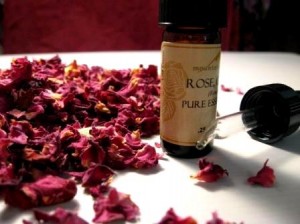
The experience of true rose essential oil is one that cannot be imitated. Rose has a myriad of uses.
“Full of love she is Aphrodite’s servant” goes the quote by Achilles Tatios (139 BC) from Alexandria.
The Fragrance of Venus is captured in the essential oil. The aroma is described as being deep, soft, hypnotic, honey-spice and having a middle note. Rose essential oil is noted to be yin in character, making it effective for delicate souls in need of healing.
The best rose essential oils for purchase are here.
Rose acts through the heart chakra, uniting physical and spiritual love, easing depression and melancholy and providing balance for those with psychological problems.
She also helps us humans through life transitions and sacred times, relieves mood swings associated with pregnancy and supporting women during childbirth. As a companion for the dying, Rose helps to reduce fear and open the doors to wisdom.
It has been used in aromatherapy for emotional crisis, headache, low libido, nervous tension and stress. Rose acts as an aphrodisiac, antibacterial, antiseptic, sedative and so much more! This is really a plant to get to know through growing, stopping to smell, using in whole form, as an essential oil or using products that are made with pure rose ingredients.
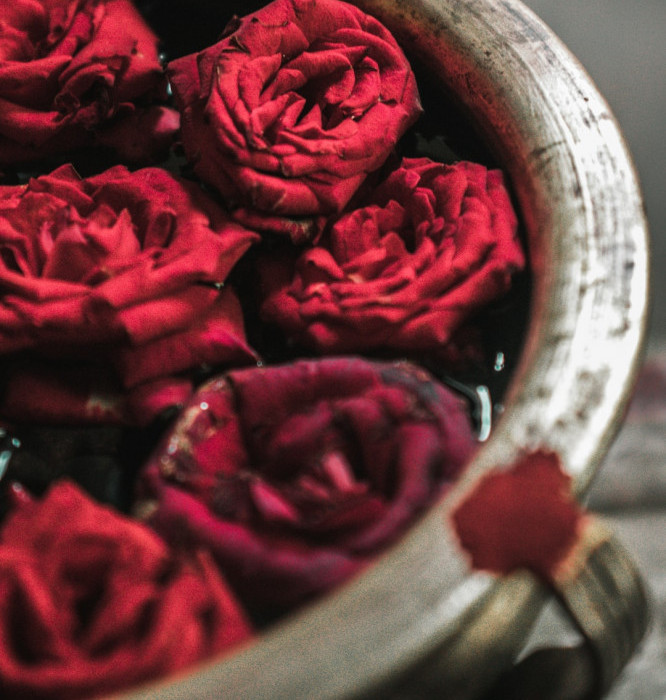 As a beauty oil, rose essential oil is unsurpassed, helping and healing every skin type. She is astringent, has skin-toning properties, and is cooling and soothing for sensitive skin.
Specific skin care uses include healing broken capillaries, moistening dry skin, for eczema, to maintain elasticity for mature and sensitive complexions, soften scarring, balancing skin problems and for wrinkles.
Rose is adaptogenic in that it is useful for all skin types and especially for dry and inflamed skin or conditions.
I use the essential oil of Rosa rugosa from Mountain Rose Herbs which is steam distilled and from China. To make 1 pound of essential oil, 5000 pounds of rose petals are needed. They need to be collected before the sun rises to retain the highest amount of delicate essential oil. Rosewater is made in this steam distillation process as well and cleanses the skin without disturbing it’s protective shield.
An herbal rose-infused oil can be easily made at home though this is a very different product than the essential oil. I like to make the herbal infused rose oil and add some essential oil to it to double the magic!
My other personal favorite ways to work with rose are as a tea with milk and honey (drinking and using this as a mask- oh so soothing!) and as flower essences.
You can find the best rose petals and rose essential oils here.