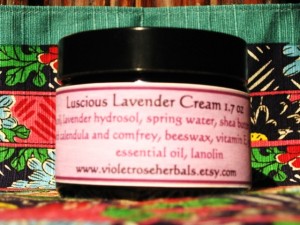
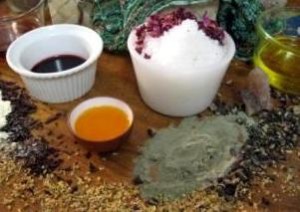
A natural skin cream is a blend of oils and waters that are binded together. The addition of essential oils, extracts and natural preservatives add aesthetic and therapeutic value while increasing shelf life.
Natural skin cream is one of the most challenging preparations to make, as oils and waters repel each other and so an emulsification can be complex. Emulsification involves temperature control of both oil and water phases, getting the blending time just right, and preventing separation from occurring.
A truly natural skin cream can also be hard to find. There are some companies that make them, either using very sanitary operations and no preservatives or natural preservatives, including essential oils. Here are my favorite companies that make truly natural creams:
I choose to avoid chemicals for skin care so I often make my own natural skin creams. There is infinite variety and experimentation- fun, fun, fun! Natural skin creams are great for dry skin- face and whole body- as they are very rich and exquisite. A tiny pinkie-fingerful goes a long way. They are even heavier than straight oils.
One of My Favorite Formulas
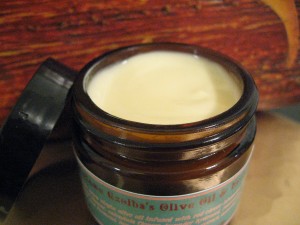
Madame’s Olive Oil & Herbs Cream
This recipe makes a 19 oz batch, enough to keep you smooth for a long time (and your friends and family). Or you can cut the recipe in half if you like.
Extra virgin olive oil (infused with lavender, dandelion flower, red clover flower, yarrow flower and calendula) 6 oz
Coconut oil 2.7 oz
Beeswax 1 oz
Lanolin ½ teaspoon
Water Phase
Borax 1 teaspoon
Rose Water 3 oz
Lavender Hydrosol 4 oz
Using the double boiler method, melt the oil phase in a Pyrex measuring cups until the oils and fats are completely melted. Allow to sit until the oils begin to solidify again. Meanwhile, turn the heat off and put the water phase into the double boiler in a separate Pyrex cup. When the oils are almost solidified, slowly add the water phase to the oil phase, beating continually with an egg beater. Emulsification is when a cream forms. Be sure to incorporate all the water into the oil.
Lastly, add the essential oils and beat in gently. Pour into clean containers and let thicken.
This cream has a natural scent and is a true olive oil cream (olive oil is the main ingredient, not a speck somewhere down the ingredient list!). It is quite rich and heavy and is well suited for very dry skin or used in small amounts. Lanolin is added to make this a rich cream suited for dry skin, babies and the elderly as well as on stubborn dry areas as a therapeutic aid.
Extra virgin olive oil is an effective skin cell regenerator. It is the first pressing of the olive and contains the highest amount of nutrients. It attracts moisture while still allowing the skin to breathe. Madame Czolba’s Olive Oil & Herbs Cream is skin softening and will help to keep the skin supple and youthful.
Coupled with the benefits of extra virgin olive oil are the herbs infused in it. Additionally rosewater and lavender hydrosol are toning and healing.
This rich cream can be used on the face and neck. It has a smooth and creamy texture and is unscented so gentle enough for the most sensitive skin. The cream may take a few minutes to be fully absorbed and only a small amount is needed.
I use natural skin creams much more in the winter. I’ve also gotten some people hooked. By adding extra special ingredients and oils, green tea extract, hydrosols and precious essential oils, to name a few, folks’ skin heals and becomes youthful like never before.
Here is a comment I’ve received about this particular cream:
“I love this. It worked great as a protectant and moisturizer in the winter and is light enough to use during the warmer weather too. It kept my face protected from winter wind and it kept it from being too dry in the winter too. I also used it on my hands at bedtime.
It also worked to remove “Gorilla Glue” from my hands. The directions on the Gorilla Glue said to use an emollient.” –Marjie D.
Witch hazel astringent is a pretty well-known folk remedy here in America. It was used by the Native Americans for its tightening, toning, and soothing properties as a decoction.
In the 1800’s it became a popular remedy in the mainstream and has managed to still be a rather common preparation. It is also called witch hazel extract. Being astringent is a property of some plants, particularly those high in tannins or other chemicals. An “astringent” is also used interchangeably with the term toner (that is what this article is about!). An extract is a medicinal tincture of the plant (where a medicinal plant is steeped in a menstruum).
Witch hazel (Hamamelis virginiana) is a native small tree in the northeastern United States. The commonly used medicinal part is the bark of the tree as well as the leaves. The bark contains 31 times more tannins than the leaf extract. If you’d like to make your own witch hazel extract, be sure to use the bark of fallen branches or at least prune the tree and use the bark and leaves from those branches. Taking bark from the trunk (girdling) can kill the tree.
Conditions That Are Helped by Witch Hazel Astringent
Witch hazel dries and tightens tissues so it works on moist and loose conditions. It is often used for conditions that are inflamed, red, and oily: acne, hemorrhoids, irritated cuts and rashes, dermatitis and itching. It can be used to help dry up poison ivy rashes, diaper rash, bedsores and other oozing, inflamed skin. High in tannins, witch hazel has natural properties that tone and tighten the pores, decrease inflammation, act as an antiseptic and slightly dry oily skin. It is also an antioxidant and radiation-protective. Witch hazel astringent makes a great aftershave and works to dry up pimples.
Buy Your Own, or Make Your Own?
Witch hazel extract can be found at many pharmacies; however, I have found this to be mostly rubbing alcohol and rather unpleasant. I prefer to purchase witch hazel astringent by the gallon from Mountain Rose Herbs. The witch hazel extract commonly available in the U.S. is a product of steam distillation. The twigs and bark are distilled in vats for 36 hours, then re-heated, condensed and filtered. Alcohol is added to the final product as a preservative. In Europe, a water-alcohol extract is used rather than the distillate.
Witch hazel hydrosol is also commercially available. An astringent can be made from witch hazel simply by tincturing the bark in 40 to 65 percent alcohol (80 to 130 proof). The finished tincture can be diluted with a floral water, like rosewater, to make a less drying, more soothing astringent. Or essential oil can be added for a particular medicinal effect.
Alternatively, a decoction can be made from the leaves and stems and the final “witch hazel water” can be preserved with alcohol. This is desirable when a high amount of tannins is required, since the distillation process actually destroys most of the tannin content.
Crafting Custom Toners and Astringents with Witch Hazel Extract
High quality witch hazel extract is generally 14% alcohol by volume and can be used to extract other herbs. One of the most common ways I make skin toners is by using witch hazel extract as a solvent (called the menstruum), tincturing other skin-loving herbs like lavender, rose, oregano, sage and thyme. To this witch hazel astringent/herbal extract, I’ll add other beneficial ingredients: flower waters, essential oils, glycerin, and aloe vera, depending upon the skin type for which I am formulating.
Witch hazel astringent is a great herbal to have on hand as a toiletry and a first aid item. It acts both cosmetically, in the treatment of acne and pimples, as well as medicinally when working with rashes, blisters and similar conditions. While some commercial preparations are high quality, be aware that many products found commercially are mostly rubbing alcohol and may have little medicinal value.
A question from a reader prompts my reply about Leucidal and using essential oils for preservation in natural cosmetics, particularly creams and lotions (water-based products).I think many people want this information so I turned it into a post! Enjoy and please leave comments or share!
Reader question:
Hi Michelle,
I’m interested in your use of Leucidal and your reference to Synergy antioxidant blend.
I have been studying herbalism for years, and have a small business in which I make a line of body products as well as various herbal edibles. I currently use a synthetic preservative in the three lotions I make because I want to offer shelf stability. I’d love to get away from the preservative and have been watching Leucidal. So far I haven’t made the change because it doesn’t address fungal spread in a cream. I’m wondering how you address that.
And simply haven’t heard of Synergy. I Googled it and got nowhere, and I checked at Mountain Rose. Can you tell me the full name so I can look into it?
It really bugs me that I have this chemical in my line. But short of telling people to use the product within a couple of months or to keep it in the frig, I don’t see options. I’d love to hear what you’ve come up with!
Thanks. I’ll be watching the site!
M
**************************************************
My answer:
Hi M,
I’m glad we got in touch.
Leucidal is a broad spectrum antifungal and antibacterial. It has been shown effective for the following microorganisms:
The asterisks indicate the fungal strains that it was tested against.
Of course, if you want to be super sure, you can always opt for challenge testing your finished product for a new formulation.
In general, I’ve used essential oils to additionally preserve the creams, though my olive oil cream does not have e.o.’s. Essential oils with antimicrobial properties are numerous so here is a start:
Also note that these have been found to have antimicrobial properties, yet their action within a cosmetic system (ie a cream formulation) may be different and that is why testing is so highly condoned. Most small scale producers cannot afford extensive testing so do what you can with the information!
Antioxidant Synergy Blend is a proprietary mixture of tocopherols (vitamin E), ascorbic acid (vitamin C) and rosemary extract. I like to add this to prevent rancidity in the oil portions of creams and sometimes in facial oils and other oil-based products. I’ve found that through The Herbarie which manufactures it.
Why make your own homemade natural skin care products?
Surely there are many, many high quality products on the market. However, there are benefits for those of us who love to craft with our hands.
For one, the practice of taking pieces of nature and shaping them into daily necessities is a ritual in itself. It can help us to feel one with and deeply connected to the Earth. We also will know that our finished products are vibrant and alive with the energy of nature. And, acts of creativity like making body products help us to feel alive!
I thought I would share some tips that I’ve learned along the way to save you headaches and wasted precious materials down the road.
1) Aseptic technique for homemade natural skin care products
Back in my biology days, we talked a lot about “aseptic technique”. Aseptic technique is basically creating a sterile environment. For product-making, this means avoiding contamination of any of the materials, tools or equipment. This serves to keep out any unwanted microorganisms in our homemade natural skin care products! Bacteria, molds and so on will cause our products to go bad.
It is great if you can have dedicated equipment and space, but there are ways to use equipment for more than one purpose:
First, be sure to clean everything that you will use very well with soap, water and friction and allow to air dry rather than towel dry. If you want to go a step further, you can boil your tools.
Always wash hands before working.
No double dipping. So if you’ve used a spoon to get the coconut oil out of the tub and then used it to mix the concoction together, don’t use that same spoon to get more coconut oil out. Mostly you’d be contaminating your coconut oil.
A word or two on reusing jars and bottles…I practice an ecological ethos in my product-making and so reusing jars is a given. It can be a pain, I will admit, particularly when oils and creams are involved. What I have found to work the best is to wipe the jars out with newspaper or old rags, then wash thoroughly in warm, soapy water and then run them through the dishwasher. With bottles, I will let warm, soapy water soak in them, shake this vigorously a few times and then run them in the dishwasher.
Always remove the white cardboard from old bottles and jars. These will be traps for microorganisms.
When making creams, I use either chopsticks or another disposable wooden stirring stick. Keep the sticks separate for mixing the oils and mixing the waters.
Some of my dedicated equipment- grater for beeswax, soap cutters, measuring cups and spatulas.
2) Preserving & Preventing Rancidity in Homemade Natural Skin Care Products
Preservation will prevent bacteria and other microorganisms from growing in the water parts while antioxidants help to prevent rancidity in the oil portions.
Many homemade products are used up quickly, like one-time facial masks and the like. For longer storage items that contain a mix of water and oil or just water, you can consider using a natural preservative. I like Leucidal (aka radish root ferment). It is a natural preservative derived through a fermentation process of radishes with a lactic acid bacterial culture.
Many essential oils have preservative and antioxidant actions as well, including thyme, oregano and clove. There is mixed review on the amount of essential oil needed to actually preserve a product and some say that it is too high of an amount to be used. I personally like to add the essential oils as additional help to preserve a formula.
For preventing oils from going rancid (noticed by the tell-tale rancid odor), Vitamin E (tocopherol), Rosemary extract and Vitamin C (ascorbic acid) are helpful. Practices such as refrigerating fragile oils and keeping them in a dark place will slow down the oxidation process as well.
3) What do you have on hand?
You can start with what is on hand-fruits, vegetables, milk, eggs-all of these have uses for making homemade natural skin care products. Learn how to use what is near before venturing afar! Spirit is right here, in the Earth all around us. Sometimes what grows around us will be more energetically potent and therefore more effective.
It is also fun to discover that most ingredients have multiple uses. For example, most oils and butters can be used for every part of the body: hair, skin (body and face) and lips.
4) Keep Notes on Your Homemade Experiments
And all the better if you can be organized about it! I’ve kept notes, however, I have notebooks full of notes and it is always a walk through history to try and find a certain recipe.
Keeping track of your experiments and formulas has obvious benefits: what works, what doesn’t, that essential oil blend that you just loved, the recipe that healed your friends psoriasis and so on.
5) Bottles for Homemade Natural Skin Care Products
Many glass food bottles can be reused for home use, just be sure to follow aseptic technique (above). For large quantities of bottles, I really like SKS Bottles and Specialty Bottles. Mountain Rose Herbs also stocks bottles that can be purchased individually and in small amounts.
6) Finding and Supporting Reliable Suppliers
I have had my go with suppliers of ingredients that I would not purchase from again! Not saying any names! What I will say is that I have leaned upon Mountain Rose Herbs for just about everything needed to make products for myself and for sale to the public. If you are in business, you probably know that ingredients need to be tracked as per the Good Manufacturing Guidelines. Mountain Rose Herbs has always promptly emailed me the needed documents for that.
Oh, and did I mention they have just about everything natural? :) You can visit them and get on your way to making products with the highest quality ingredients without all the trial and error I’ve done for you! Check them out for all of the ingredients you need for making homemade natural skin care products.
Bay rum oil is a classic fragrance for men originally made in the west Indies and is used as a cologne, aftershave and skin toner. It is made like a tincture of some very readily available ingredients. There are really 2 distinct products here: an aftershave and an oil.
Both of these products can be used for deodorant purposes. Yes, many potential mates want you to smell like the spicy and natural Earth! Homemade or all natural products are not offensive like chemical products. They have a subtle effect and add to allure rather than knocking people out when you walk by them.
The basic ingredients to make bay rum oil and astringent are the following: rum, leaves and berries of the bay tree (Pimenta racemosa), citrus peels like lime or orange, and spices including cloves and cinnamon. Traditional Bay Rum is made from the leaves of the Caribbean tree Pimenta racemosa. Leaves of the Bay Laurel tree, Laurus nobilis, can be substituted. They have similar properties but of course, not identical. Using a creative combination of these ingredients, you can make your bay rum blend smell how you like.
Bay Leaf Essential Oil Uses
Bay leaf essential oil is used to control dandruff, promote hair growth and stimulate lymph and blood flow. It has a hot nature and so will create a heat sensation when applied. If you tend to be a hot person, err on the lower amount of essential oil added to the oil blend.
All of the ingredients used in bay rum oil and aftershave are grounding yet stimulating. Bay rum makes a great skin toner and will help to prevent razor burn, bumps and break outs of all sorts.
So here go 2 recipes to get you started…
Bay Rum Aftershave
This makes a bracing, astringent aftershave to help prevent razor burn, decrease large pore size and clear acne. It also acts as cologne and can also be used under the pits to freshen up. This is adapted from Rosemary Gladstar’s Family Herbal.
Ingredients:
Bay leaves, fresh if possible Allspice, ground or grated 1 tablespoon Cloves, whole 1 tablespoon Ginger, grated 2 tablespoons Orange or lime peel 1 whole Rum Lime hydrosol (optional) Bay (Pimenta racemosa) essential oil (optional)
Directions:
Fill a 16 ounce jar with bay leaves and add the other spices and citrus. Cover this with rum, shake and allow to steep for 4 weeks.
Strain out the herbs and rebottle the resulting liquid. Lime hydrosol and Essential oil of bay (Pimenta racemosa) can be added, but be sure to add just a few drops of bay and test the smell.
Bay Rum Oil
This is super easy. Basically, mix a carrier oil with essential oil of bay (Pimenta racemosa), shake and use.
Ingredients:
Carrier oil, such as sweet almond or jojoba Bay essential oil (Pimenta racemosa)
Directions:
Get a cool bottle that you will be happy looking at and using regularly. Pour your carrier oil of choice into the bottle, leaving about an inch or two at the top. Then start adding drops of essential oil at a rate of 10 drops per ounce of carrier oil. Cap and shake, then test if the scent is strong enough for you.
When you get it to your liking, cap and it’s ready to use!
A modification of this recipe is to first infuse the carrier oil with bay leaves for a month, strain and then add essential oil.
Looking to purchase natural skin products?? Scroll to the bottom where I recommend a few of my favorite companies.
When I say natural skin products, I am very serious about the ‘natural’ part. Here is my definition of “natural”, in context of skin products:
“of or from the Earth, can be crafted using low tech or mechanical means from plants, minerals, and other nature-derived substances. In a state of least refinement, still maintaining life and vibrancy from its Source.”
I am much less apprehensive of normally occurring bacteria than I am of chemicals. I am all about common sense and using our senses to assess the situation/product. Transparency is a must. If ingredients are not being disclosed, I assume there is something hidden.
Simple natural skin products are wonderfully effective (pure, raw ingredients used singly) yet I also appreciate the beauty and use of combinations, mixtures and concoctions. Synergy is powerful too.
Developing an Eye for Ingredient Lists
It’s super easy to spot synthetics in a list, with some education and experience. Generally, the words are long, difficult to pronounce and may be accompanied by numbers before the letters.
We do currently live in a world where chemicals are so intricate in our societal fabric that it’s hard to be totally pure. And 78% natural is better than 20% or 0%! While the focus of this site is on the 100% pure and wild, the following list may help you decide between the better of the two “okays”. Best is at the top!
Unrefined, steam distilled
Partially refined
Refined
Solvent extracted
Parabens, sodium laureth
No list at all!
Also, be mindful that on an ingredient list, the amount of each ingredient is listed in order. So, the first three ingredients may make up 70% of the formula, while the last three only 1%. Of course, the actual formula is generally proprietary while the ingredients are on the list.
Perfumes usually don’t have ingredient lists (scary!).
Using Your Sense of Smell
It becomes quite easy to smell a rat once you know what they smell like! Artificial fragrance is often found in so-called “natural” skin products. It is generally strong, has a longer life (it lingers for a long time), can be irritating or even create difficulty in breathing deeply and it smells nothing like nature!
Truly natural aromas come from essential oils most of the time and are written as such:
__ essential oil Essential oil of __ Pure essential oil Attar of ___ __ absolute
As compared to synthetics:
__ oil (deceptive!) __fragrance oil Fragrance (this is cover for many chemicals) __perfume oil (have to investigate this one-could be natural or synthetic)
Pure aromas from plant substances are therapeutic; they can be uplifting, cleansing, calming, spirit-provoking, and so on. They are often more subtle, definitely divine and hold the essence of the plant.
Other ways to scent a natural skin product:
Flower waters (hydrosols)
Oils that have scent (ex: coconut oil)
Extracts and tinctures (I use vanilla tincture for perfumes)
Herbal oils (not very strong, however, highly aromatic herbs like lavender, mints, cinnamon can deliver scent)
Raw herbs in a finished product (ex: cleansing grains)
Using Your Sense of Sight
Synthetics colored with dyes are unnaturally bright and hues that rarely occur in nature.
Think bubble gum pink, neon yellow, lime green and bleached white.
Natural skin products can be very colorful, using herbs that have dye substances and mineral pigments. I make a pink to dark purple lip balm using alkanet root. The color depth depends on how much alkanet root I use. I’ve also colored my rose cream pink using alkanet oil.
Using Your Sense of Touch
Natural skin products can be rawer in their texture. Think about each of these to understand what I mean: sugar grinds, pastes from herbs and liquids, sticky honey, smooth coconut oil, protective staying power of beeswax and a separation of oil and water in creams.
There are many, many chemicals available to bind creams to prevent separation, remove stick, create a “lighter” feel, etc. If it feels fake, it just may be.
Become an Expert
When becoming experienced with natural skin products, use the lists above and your senses to guide you. Purchase prepared products, bulk ingredients and compare, make your own and take notes. If you do have synthetic products, compare with the all natural ones for scent, sight and feel. Soon enough you will be able to tell just by the packaging a truly natural skin product and can make an informed choice!
Mountain Rose Herbs is a very dependable place to purchase natural skin products, including raw ingredients and prepared creams, oil, cleansing grains and powders, essential oils and lots more!
Just Natural Skin Care is also an all natural brand and they also have lovely hair care products.
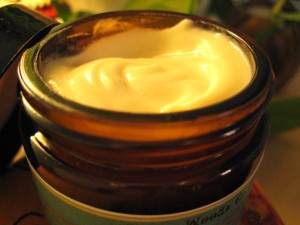
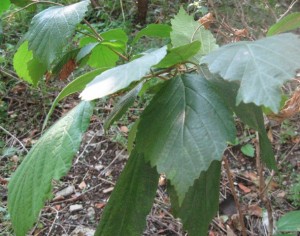 Witch hazel astringent is a pretty well-known folk remedy here in America. It was used by the Native Americans for its tightening, toning, and soothing properties as a decoction.